
Real-Time Player Segmentation for Smarter Deposit Journeys
Feb 16, 2026
Fluid
Real-time player segmentation enhances deposit journeys in iGaming, boosting satisfaction and conversion rates through personalized payment experiences.

Real-time player segmentation transforms how iGaming operators handle deposits by tailoring payment flows to individual player behaviours and preferences. This approach uses live data to categorise players instantly, offering personalised deposit experiences that align with their habits, location, and payment preferences. Here's what you need to know:
What it is: A system that analyses live player data (e.g., deposit habits, session times, location) to create customised payment experiences in real time.
Why it matters: Personalised deposit flows reduce friction, increase player satisfaction, and improve conversion rates, especially in regulated markets like Malta.
How it works: Machine learning tools process every player interaction, refining segmentation and personalisation continuously.
For Maltese players: Payment systems cater to local preferences, such as using EUR (€), displaying dates in dd/mm/yyyy format, and prioritising popular European payment methods.
Player Segmentation: A Practical Mixed Method Approach
Core Segmentation Methods for Better Deposits
Player segmentation turns deposits into personalised experiences by leveraging live behavioural and value-driven data. Three main approaches - behavioural segmentation, value-based segmentation, and tiered segmentation - offer distinct ways to fine-tune deposit processes and boost player engagement. Here's how each method transforms raw data into actionable strategies.
Behavioural Segmentation
This method categorises players based on their in-game actions, such as their preferred game types, how often they play, session lengths, and betting patterns. By analysing these behaviours, operators can adapt deposit processes to match player habits. For instance, if data shows a player spends long sessions in specific games, a more streamlined deposit flow might be ideal. On the other hand, players with shorter sessions might benefit from additional deposit options displayed upfront.
Value-Based Segmentation
Value-based segmentation focuses on players' monetary contributions, often using the Recency, Frequency, and Monetary (RFM) model. This approach helps identify high-value players and tailor strategies to maximise their lifetime value. The RFM model evaluates:
Recency: How recently a player made a deposit.
Frequency: How often deposits are made.
Monetary: The total amount deposited.
This ensures that deposit experiences align with each player's financial contribution, reflecting their importance to the business.
Tiered Segmentation for Incentive Alignment
Tiered segmentation groups players into levels - such as Bronze, Silver, Gold, Platinum, and VIP - based on a mix of activity, loyalty, and monetary value. Factors like the first deposit can determine initial tier placement, while ongoing activity influences progression through the tiers. This structured system not only aligns deposit rewards and incentives with a player’s tier but also creates a sense of achievement and exclusivity. When combined with insights from behavioural and value-based segmentation, tiered analysis delivers more customised deposit experiences tailored to each player's journey.
Using AI-Driven Tools for Real-Time Segmentation
AI transforms static data into actionable insights, creating smarter and more personalised deposit experiences. By analysing extensive real-time player data, AI-driven tools allow operators to craft payment journeys that adjust instantly to a player’s preferences and circumstances. This approach ensures deposit processes are tailored to meet evolving player needs.
AI-Powered Segmentation and Predictive Analytics
AI takes segmentation to a whole new level of precision and flexibility. Unlike traditional methods that rely solely on historical data, AI-powered systems continuously refine segmentation by analysing patterns across multiple data points. Machine learning algorithms build detailed, ever-evolving player profiles. This enables operators to align deposit processes with real-time player behaviour, creating a more adaptive and responsive experience.
Fluid's Capabilities for Personalised Deposit Journeys
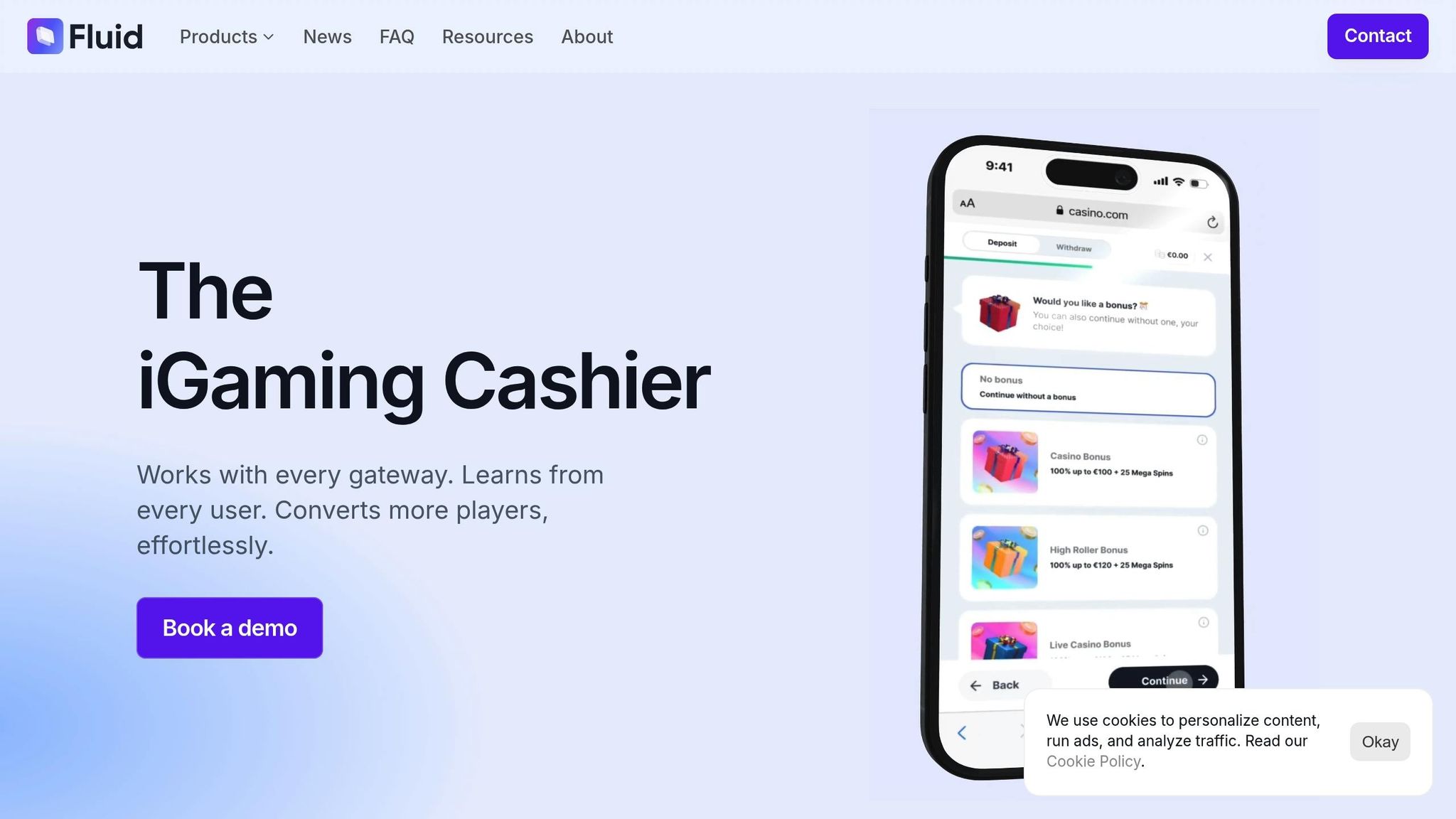
Fluid's AI-powered digital cashier is changing the game for iGaming operators by combining real-time behavioural analytics with AI-driven payment personalisation. This platform tailors deposit experiences to individual players, ensuring each journey feels relevant and seamless.
Fluid’s AI not only enhances security by preventing fraud but also delivers a consistent and branded deposit experience. Operators can maintain a unified brand identity while catering to different player needs. For seasoned depositors, Fluid provides streamlined payment flows, while newcomers receive step-by-step guidance to make the process easier. Designed with a mobile and tablet-first approach, Fluid ensures these personalised experiences work flawlessly across all devices - an essential feature in Malta’s mobile-first gaming market.
All of this is backed by actionable insights displayed on real-time dashboards.
Monitoring Player Movements with Real-Time Dashboards
Fluid’s real-time dashboards simplify complex segmentation data into clear, actionable insights. These dashboards allow operators to track key performance metrics and observe player behaviour trends, making it easier to adjust deposit flows when needed. With a comprehensive view of performance across different player segments, operators can refine personalisation strategies on the fly, improving user experience and boosting conversion rates.
Designing Personalised Deposit Journeys
Crafting personalised deposit journeys requires a mix of smart UX design and data-driven insights. The aim is to eliminate unnecessary steps while keeping the process secure, ensuring players feel the experience is tailored just for them. These customised flows work hand-in-hand with real-time segmentation strategies, turning routine transactions into moments that build trust and encourage repeat deposits.
Step-by-Step UX-Optimised Payment Flows
The foundation of an effective deposit journey starts with presenting the right payment options. Instead of overwhelming players with every available method, intelligent segmentation prioritises the most relevant choices. For instance, high-value players might see options like bank transfers prominently displayed, while casual players are offered quicker methods like e-wallets or mobile payments.
The payment form itself adjusts based on the player's history and preferences. Returning players benefit from conveniences like pre-filled details and one-click deposits, while new users are guided step-by-step with clear instructions, security indicators, and helpful tooltips that explain why certain details are required.
For Malta’s gaming market, where many players use smartphones and tablets, mobile-first design is essential. This means larger buttons, simplified forms, and smooth navigation across various screen sizes. Instead of feeling like a desktop form squeezed onto a smaller screen, the process should feel purpose-built for mobile users.
Once a deposit is completed, confirmation pages reassure players by displaying transaction details and offering personalised suggestions for their next gaming activity. These recommendations are tailored based on deposit amounts and player preferences, creating a seamless transition into the gaming experience.
Automated Campaign Triggers for Player Engagement
Personalised deposit flows can be further enhanced with automated triggers that respond to player behaviour. For example, if a player abandons a deposit midway, an automated reminder can be sent within 24 hours, often with a small incentive to encourage completion. These messages are customised based on the player’s usual deposit habits and preferred communication channels.
Inactivity campaigns are another way to re-engage players. VIP players who haven’t deposited for a week might receive a personalised message from their account manager, whereas casual players could get an automated email after two weeks. Timing is critical, with each communication tailored to the player’s segmentation profile.
Celebrating milestones is another effective engagement strategy. For example, when a player hits their highest deposit or completes their tenth transaction, the system can send a congratulatory message paired with a relevant bonus. These small gestures help create emotional connections and encourage ongoing participation.
Seasonal and event-based triggers also play a role. For instance, players who typically deposit before football matches might receive notifications about upcoming games, while fans of casino games are alerted to new slot releases. These timely messages tap into external events to boost engagement.
Brand Integration for iGaming Operators
Maintaining a consistent brand identity throughout the deposit journey is essential for building trust. From colour schemes to fonts, every visual element should align with the operator’s main platform. This consistency reassures players that they’re still within the same trusted environment, rather than being redirected to a generic payment page.
Customised messaging also plays a key role. Whether the brand's tone is sleek and professional or lively and playful, the deposit journey should reflect this personality. Everything from button labels to error messages and confirmation screens should reinforce the operator's unique voice.
White-label integration ensures the deposit process feels like a natural extension of the operator’s platform. Players should never feel like they’ve been redirected to an external site, as this can erode trust and increase abandonment rates. By keeping the experience seamless and consistent, operators can strengthen the personalised deposit models enabled by real-time analytics.
Measuring the Impact of Better Deposit Journeys
To understand how personalised deposit journeys influence player behaviour, revenue, and retention, it's crucial to track key metrics and compare segmentation models. These insights lay the groundwork for continuous improvements in the deposit process.
Key Performance Indicators (KPIs) for Deposit Success
When evaluating deposit performance, it’s important to look beyond simple conversion rates. Financial metrics like Gross Gaming Revenue (GGR) and Net Gaming Revenue (NGR) offer a deeper understanding of how player segmentation affects overall earnings. Additionally, analysing deposit and withdrawal patterns can uncover subtle trends in player behaviour.
Bonus-related KPIs also provide valuable insights. These include metrics such as:
Bonus amount and rate
Player bonus uptake
Bonus value per player
Another critical metric is Player Lifetime Value (LTV). Growth in LTV reflects long-term engagement, showing how effective segmentation can encourage casual players to evolve into loyal, long-term users. Retention and reactivation rates further demonstrate the success of segmentation strategies.
Comparing Segmentation Models
To evaluate the effectiveness of different segmentation models, consider their impact on financial outcomes, player behaviour, and deposit efficiency. Behavioural segmentation has consistently shown its ability to enhance player engagement.
For short-term gains, value-based segmentation often excels by targeting high-value players. On the other hand, AI-driven segmentation uses advanced analytics to continuously refine the deposit experience. Combining these approaches into a hybrid model can yield strong overall results, though it demands more advanced technical capabilities and ongoing refinement.
Using Segmentation for Predictive Retention and Smoother Experiences
Segmentation data doesn’t just guide model comparisons - it also supports predictive retention and friction reduction.
Real-time data gathered through segmentation can highlight early warning signs, such as declining deposit frequency, smaller transaction amounts, or longer breaks between sessions. These insights enable operators to take timely action, re-engaging players before they drift away.
Additionally, predictive models based on segmentation data can identify pain points in the deposit process. For instance, high-value players might hesitate due to lengthy verification steps, while casual players may find overly complicated payment forms discouraging. Leveraging segmentation insights allows operators to address these barriers effectively, tailoring the experience to each player type.
This approach ties directly into real-time adjustments, as discussed earlier. When segmentation data informs payment routing decisions, deposit approval rates often improve. The result? A payment experience that’s not only secure but also smooth and efficient - particularly for trusted, long-term players.
Conclusion: Better Deposit Journeys with Real-Time Segmentation
Real-time player segmentation is transforming deposit journeys by replacing generic approaches with personalised payment experiences tailored to individual behaviours. Operators who embrace these advanced segmentation strategies often witness noticeable boosts in conversion rates, stronger player retention, and improved revenue outcomes.
By building on the segmentation methods covered earlier, operators can fine-tune strategies to offer even more customised player experiences. With the help of AI, these segments are continuously refined, paving the way for deposit journeys that anticipate player needs before they even articulate them.
The use of real-time data allows operators to proactively minimise friction in the payment process. This predictive capability not only enhances individual transactions but also fosters long-term relationships with players, contributing to consistent growth.
Fluid's AI-powered digital cashier, as highlighted earlier, simplifies this process by combining sophisticated segmentation with payment flows that align seamlessly with a brand’s identity. Through real-time analytics, smooth integration, and user-friendly payment experiences, operators can create deposit journeys that feel intuitive and natural while leveraging advanced segmentation technology.
FAQs
How can real-time player segmentation improve deposit experiences in iGaming?
Real-time player segmentation enables iGaming operators to adapt deposit journeys to match each player's behaviour and preferences. By using real-time data analysis, operators can design personalised payment flows that feel intuitive and engaging, improving the overall transaction experience.
This customised strategy doesn’t just improve the user experience - it also increases conversion rates while streamlining payment processes. By aligning deposit options with what players actually need, operators can deliver a smooth, hassle-free payment journey that keeps players satisfied.
How can AI-driven tools improve real-time player segmentation in the iGaming industry?
AI-powered tools give iGaming operators the ability to track and analyse player behaviour as it happens. This means they can create more personalised deposit experiences that align with individual preferences, making the payment process smoother and more enjoyable. The result? Happier players who are more likely to stick around.
On top of that, AI takes marketing efforts to the next level by spotting trends and patterns. This allows operators to craft highly targeted campaigns that resonate with their audience. The payoff is twofold: improved spending habits among players and higher conversion rates. In the end, both players and operators benefit from this smarter approach.
What makes behavioural segmentation different from value-based or tiered segmentation when personalising deposit journeys?
Behavioural segmentation involves grouping players based on their actions, habits, and preferences. For example, it considers factors like how often they make deposits, their preferred payment methods, or their gameplay behaviours. This method enables real-time tweaks to the deposit process, offering a more personalised and smooth experience.
On the other hand, value-based segmentation focuses on categorising players by their monetary contributions or overall lifetime value. Similarly, tiered segmentation places players into predefined categories, such as VIP members or casual users. While these approaches have their benefits, behavioural segmentation stands out for its flexibility. By adapting to individual player behaviours, it leads to better engagement and higher conversion rates.