
Data-Driven Insights From Millions of iGaming Transactions
Feb 12, 2026
Fluid
Explore how data-driven insights from iGaming transactions enhance payment systems, fraud detection, and compliance in Malta's gaming industry.

iGaming operators process millions of transactions daily, generating a wealth of data that can improve payment systems, detect fraud, and ensure compliance. By studying transaction patterns, operators can reduce failed payments, enhance player satisfaction, and comply with Malta Gaming Authority (MGA) regulations. Key takeaways include:
Payment trends: E-wallets like Skrill and Neteller dominate, while cryptocurrency and mobile payments are growing.
Fraud risks: Account takeovers, bonus abuse, chargebacks, and money laundering pose major challenges.
Solutions: AI-powered tools analyse transactions in real-time, flagging risks and improving payment flows.
Compliance: Operators must meet strict MGA standards, including detailed monitoring and reporting.
With Malta being a global iGaming hub, leveraging transaction data not only improves payment efficiency but also strengthens security and player trust.
Data & AI in fraud detection | most common casino frauds with Toms Andersons and Joshua Gibbs
Payment Behaviour Trends Among iGaming Players
Building on earlier insights into payment data, let’s dive into how iGaming players approach payments. By analysing millions of transactions, we can identify clear patterns and preferences that help refine and improve payment systems. Here’s a closer look at the most popular methods, success rates, and actionable strategies to enhance payment experiences.
Popular Payment Methods in Malta
In Malta, e-wallets like Skrill, Neteller, and PayPal are widely used. Their appeal lies in the convenience and security they offer. While traditional card payments remain a staple, there’s growing interest in cryptocurrency solutions. Players appreciate the speed and transparency of blockchain transactions. Meanwhile, mobile payment options such as Apple Pay are becoming increasingly popular, thanks to their quick and seamless user experience.
Transaction Success Rates and Demographic Insights
Payment preferences directly influence transaction success rates, and these preferences often vary by demographic. Younger players tend to favour mobile payments and cryptocurrency, drawn by their tech-savviness and speed. On the other hand, older players often stick to e-wallets or traditional card options. Success rates can hinge on factors like verification processes, transaction timing, and the reliability of the payment method itself. By understanding these nuances, operators can fine-tune payment systems to cater to a diverse audience.
Practical Strategies for Improving Payment Flows
To optimise payment experiences, consider these strategies:
Expand payment options: Offer a mix of traditional and emerging methods to meet diverse player preferences.
Leverage historical data: Analyse past transactions to optimise payment routing and reduce failures.
Implementreal-time retries: Automatically retry failed transactions to minimise disruptions.
Localise the experience: Show amounts in Euros with proper formatting, use familiar local bank names, and provide clear instructions in Maltese where applicable.
With Malta’s mobile gaming market expected to reach €5.86 million by 2025, growing at a rate of 7.07%, it’s essential to prioritise mobile-friendly payment systems to keep up with this expanding market.
Fraud Detection and Prevention in iGaming
Fraud in iGaming goes far beyond financial losses - it's about safeguarding player trust and staying in line with strict regulations. With Malta being a global hub for iGaming, operators here face increasingly sophisticated fraud tactics, requiring equally advanced countermeasures. By analysing large-scale data, fraud patterns become clearer, offering insights into how to combat these challenges. Let’s break down the common fraud tactics, the role of technology, and the regulatory requirements shaping Malta's iGaming industry.
Common Fraud Patterns in Maltese iGaming Transactions
One of the most damaging threats in Malta’s iGaming sector is account takeover attacks. Fraudsters leverage stolen credentials to gain access to legitimate player accounts. Once inside, they often change payment details and withdraw funds before being detected. These attacks tend to spike during high-traffic periods, making them even harder to spot in real time.
Another major issue is bonus abuse schemes, where fraud rings exploit promotional offers. By creating multiple accounts - often using stolen or fake identities - these groups manipulate welcome bonuses and other incentives. They frequently use VPNs to hide their true location and mix payment methods to avoid detection.
Chargeback fraud is also a significant concern. In these cases, players deposit funds, play, and sometimes even win, only to later dispute the charges with their banks. This leaves operators not only losing the deposited funds but also dealing with additional chargeback fees. Proving that the transactions were legitimate can be a resource-intensive process.
Money laundering through gaming presents another serious risk. Criminals deposit illicit funds, engage in minimal gameplay to create a false trail, and then withdraw the money as legitimate winnings. These activities often involve large deposits paired with unusually low gameplay, making careful monitoring essential for detection.
AI-Powered Fraud Prevention Tools
The fight against fraud today heavily relies on real-time transaction monitoring powered by machine learning. These systems analyse hundreds of data points for each transaction, such as device details, user behaviour, and payment history. Suspicious transactions can be flagged or blocked instantly, helping operators act before significant damage is done.
Risk scoring algorithms are another key tool. They assign a risk score to every transaction based on factors like unusual device usage or atypical locations. For instance, a player attempting a large withdrawal from a new device in an unexpected region might trigger a high-risk score, requiring additional verification. These algorithms constantly evolve, learning from new fraud patterns and reducing false alarms.
Fluid’s AI-driven analysis goes a step further, identifying subtle irregularities in gameplay and payment behaviours. This proactive approach helps to prevent fraud before it escalates.
To balance security with user experience, escalation mechanisms are in place. High-risk transactions are flagged for manual review, while low-risk ones are processed seamlessly. This ensures legitimate players enjoy a smooth experience, while complex fraud attempts get the attention they require.
Regulatory Compliance in Fraud Prevention
In Malta, the Malta Gaming Authority (MGA) sets strict rules for fraud prevention and anti-money laundering (AML). Operators must implement rigorous customer due diligence processes, advanced transaction monitoring systems, and clear protocols for reporting any suspicious activity. These activities must be well-documented to meet regulatory inspection standards.
Know Your Customer (KYC) requirements are a cornerstone of these regulations. Operators are required to verify player identities, with additional checks for high-value transactions to ensure legitimacy.
When potential money laundering or terrorist financing is detected, operators must file Suspicious Activity Reports (SARs) with the Financial Intelligence Analysis Unit (FIAU). These reports are mandatory, regardless of the transaction amount, and serve as a critical tool in combating financial crimes.
Regular audits ensure compliance with MGA standards. Operators must prove their systems are effectively identifying and preventing fraud while maintaining detailed records for audit purposes. Non-compliance can result in severe penalties, including licence suspension or revocation.
Additionally, data protection laws under GDPR play a significant role. Operators must handle player data responsibly, ensuring they have a legal basis for processing and that all information is stored securely and only for as long as necessary. This balance between data protection and fraud prevention is crucial in maintaining trust and compliance.
Personalising Payment Experiences to Improve Player Satisfaction
Building on earlier insights into payment trends, personalisation takes the payment process to a whole new level. In the iGaming world, players expect payment experiences tailored to their preferences. With millions of transactions happening daily, operators have the opportunity to craft personalised payment paths that not only improve conversion rates but also enhance player satisfaction.
The Role of AI in Personalising Payment Journeys
AI plays a pivotal role in turning raw transaction data into meaningful insights about player behaviour. By analysing patterns across countless transactions, AI can pinpoint the best payment methods for individual players, identify optimal deposit timings, and determine transaction amounts that feel comfortable.
At the heart of personalisation lies behavioural pattern recognition. AI takes into account factors like the type of device being used, the time of day, a player’s location, and their past payment preferences to build detailed player profiles. This allows for dynamic ranking, where payment options are reordered based on the likelihood of success for each user. The result? Fewer obstacles and a higher chance of smooth, hassle-free transactions.
Real-time adjustments are another game-changer. If a player’s preferred payment method fails, the system quickly suggests alternatives by referencing similar player profiles. This proactive approach helps prevent abandoned transactions and keeps the experience seamless.
Fluid’s solution takes these strategies a step further by analysing user behaviour in real time and tailoring payment flows to individual needs. This goes beyond simply choosing a payment method - it also includes optimising transaction timings, amounts, and even verification steps based on risk assessments. These insights feed directly into UX design, creating a more intuitive and satisfying experience.
Enhancing Payment UX for Maltese Players
As a global iGaming hub, Malta has a unique player base that includes both local users and international players using platforms licensed in Malta. To create optimal payment experiences, operators must understand local habits and device preferences.
A mobile-first approach is key, as most iGaming transactions in Malta happen on mobile devices. This means designing interfaces that are easy to navigate with a thumb, featuring large touch targets and simplified input fields. Features like autofill and stored payment methods can streamline the process further, reducing the effort required from players.
Trust is another crucial factor. Payment flows should feel like a natural extension of the platform, not a disconnected experience. By integrating the platform’s branding, colours, and design elements into the payment process, players are reassured that they’re in a secure and familiar environment.
Local payment preferences matter too. While international credit cards remain popular, many Maltese players prefer SEPA transfers, and the growing interest in cryptocurrencies highlights the need for robust digital wallet support. Payment systems must cater to these diverse options without overwhelming users. Progressive disclosure can help by prioritising the most relevant payment methods and offering additional options through a “More payment methods” link.
Clear error handling is equally important. When a transaction fails, players need straightforward explanations and actionable next steps. For example, instead of a generic “Transaction failed” message, providing details like “Your card issuer declined the transaction. Please try another payment method or contact your bank” can make a big difference in user experience.
These tailored enhancements have been shown to deliver tangible results, particularly when it comes to retaining players.
Case Study: Improving Player Retention Through Personalisation
Personalised payment experiences don’t just make transactions smoother - they can significantly boost player retention. When players encounter payment processes that are intuitive and tailored to their needs, their satisfaction with the platform increases, leading to higher retention rates and greater lifetime value.
By reducing friction and building trust, personalisation improves conversion rates. Players are less likely to abandon payments, especially when their preferred methods are prominently displayed and the process feels effortless. This is particularly true for larger transactions, where players tend to be more cautious.
Another key benefit is enhanced trust. Reliable, personalised payment experiences encourage players to return to the platform and even recommend it to others. Additionally, by using predictive analytics to reduce failed transactions and minimise support queries, operators can achieve operational efficiencies that benefit both the business and the players.
The key to success lies in striking the right balance between automation and human insight. By aligning personalised payment strategies with overall user experience goals and regulatory requirements, operators can make tailored payment journeys a core element of their platform’s long-term success.
Regulatory and Operational Best Practices for Malta's iGaming Sector
Malta has established itself as a leader in the iGaming industry, thanks to its strong regulatory framework that prioritises player protection and financial integrity. For operators, adhering to these guidelines isn't just about avoiding penalties - it's about creating operations that are trustworthy and built to last.
Understanding MGA's Payment Processing Regulations
The Malta Gaming Authority (MGA) places a strong emphasis on safeguarding players and ensuring financial transparency. To comply, operators need to conduct thorough due diligence, keep player funds in separate accounts with detailed records, and establish written agreements with payment providers. These agreements should clearly outline responsibilities for anti-money laundering (AML) measures, fraud prevention, and managing chargebacks.
Modern compliance tools now include real-time monitoring systems that can quickly identify and address unusual payment activity. This approach not only bolsters security but also aligns with the MGA's focus on operational efficiency. Such diligence is essential for maintaining secure and reliable payment systems, as previously discussed.
Taxation and Financial Considerations
Malta's tax framework for gaming operators offers attractive benefits, but it also demands careful financial management. Operators must stay on top of their fiscal obligations, such as corporate tax and VAT, by maintaining accurate records and keeping processing costs under control. Strategies like reserve management and currency hedging can help reduce exposure to market fluctuations. These financial practices complement the secure and efficient processes discussed earlier in this article.
Best Practices for Operational Efficiency
Achieving operational efficiency requires meticulous attention to detail. Maintaining clear audit trails that log transaction timestamps, device data, and risk evaluations is a good starting point. Real-time deposit reconciliation through automation reduces errors, while scalable, AI-driven systems can make payment routing more efficient. Additionally, leveraging RegTech solutions for automated compliance reporting simplifies regulatory adherence and supports sustainable growth in Malta's fast-paced iGaming sector. This level of operational discipline ties directly into the personalised and data-focused payment strategies explored earlier in the article.
Conclusion: Maximising iGaming Payment Potential With Fluid
Looking at iGaming transactions in Malta, it's clear that success hinges on smart, data-driven payment strategies. Operators who tap into these insights can see real improvements in areas like player retention, fraud prevention, and staying compliant with regulations. This approach opens the door for platforms such as Fluid to reshape how payments are handled in the industry.
As a global iGaming hub, Malta offers a unique environment where personalised payment experiences aren't just a bonus - they're a necessity. Players today expect smooth, tailored transactions, and meeting these expectations is key to staying ahead in the competitive landscape.
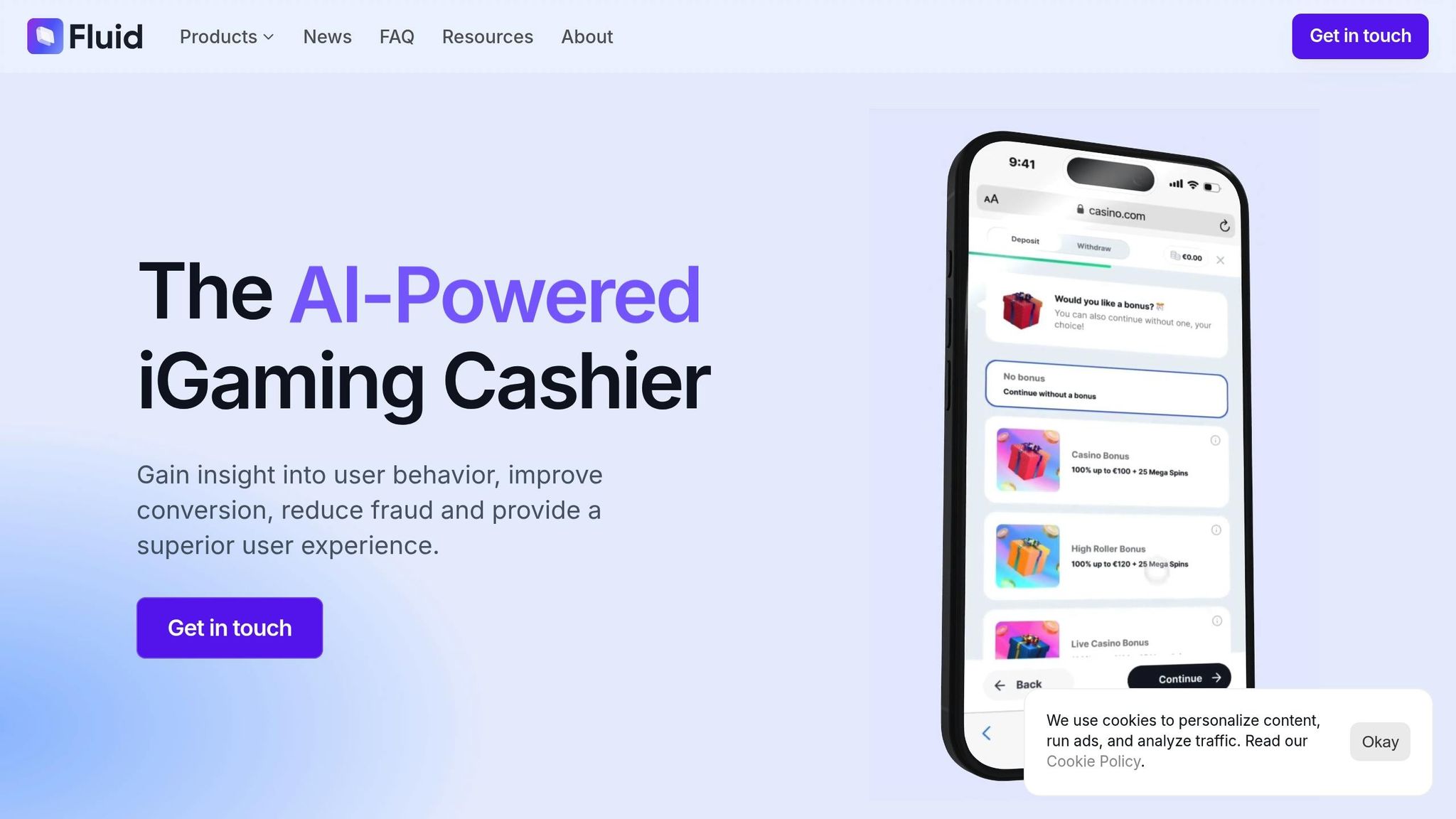
Fluid’s AI-powered digital cashier takes data insights and turns them into practical strategies. It creates personalised payment experiences that not only improve conversion rates but also enhance security by spotting suspicious activity early on.
With seamless integration, Fluid aligns with MGA requirements, offering compliance tools that are easy to use, real-time analytics, and optimised payment flows. These features help reduce transaction abandonment and improve overall player satisfaction.
By leveraging data-driven insights and AI-powered personalisation, operators can turn transaction data into a strategic advantage. Fluid's secure and efficient payment solutions provide the tools needed to thrive in Malta's fast-paced iGaming sector, laying the groundwork for sustained success.
The future of payment processing goes beyond transactions - it’s about building engaging, loyalty-driving experiences. With Fluid, every payment becomes an opportunity for growth.
FAQs
How can iGaming operators use AI to improve payment security and prevent fraud in real-time?
iGaming operators have a powerful ally in AI-driven fraud detection systems, which keep a close watch on transactions and player behaviour in real-time. By analysing patterns and identifying anomalies, these systems can flag suspicious activities like sudden spikes in betting or odd payment attempts. This helps stop fraudulent actions before they can cause significant damage.
What makes these tools even more effective is their ability to learn from past data. By doing so, they stay ahead of evolving fraud tactics, offering a proactive approach to security. The result? Operators not only shield themselves from potential financial losses but also create a safer, more trustworthy environment for players to enjoy their experience.
What are the main compliance requirements for iGaming operators in Malta, and how can they meet MGA standards effectively?
iGaming operators in Malta must adhere to the regulations set by the Malta Gaming Authority (MGA). These regulations cover crucial areas such as licensing, financial stability, technical operations, and responsible gaming practices. The goal is to promote fair gaming, safeguard players, and maintain the industry's reputation.
To align with MGA standards, operators should consider forming a dedicated compliance team to track regulatory updates and ensure they remain compliant. Collaborating with seasoned legal advisors and implementing strong internal controls can further streamline this process. Investing in compliance tools and taking a proactive approach not only helps avoid penalties but also strengthens player trust.
How does customising payment options enhance player satisfaction and loyalty in the iGaming industry?
Customising payment options is a game-changer when it comes to improving player satisfaction and loyalty in the iGaming world. By offering payment methods that match players' preferences - whether that's mobile wallets, cryptocurrency, or localised options - operators can create a smoother, more enjoyable experience. This not only makes transactions easier but also helps build trust and a sense of convenience.
On top of that, adapting payment flows to match individual player behaviours and needs adds a personal touch. When players feel that their unique preferences are understood, they’re more likely to stick around. In an industry as competitive as iGaming, these thoughtful adjustments can go a long way in keeping players engaged for the long haul.