
Building Player Trust Through Seamless Cashier UX

Explore how secure, fast, and localized cashier experiences build trust among iGaming players, enhancing player loyalty and satisfaction.

Trust in iGaming payments is built through secure, fast, and user-friendly cashier systems. Players expect deposits and withdrawals to be straightforward, transparent, and reliable. A poor payment experience can frustrate users, while smooth transactions encourage loyalty. Here’s what matters most:
-
Security: Features like SSL encryption, PCI DSS compliance, and multi-factor authentication protect player data.
-
Speed: Delays in deposits or withdrawals can drive players away. Instant processing is now the standard.
-
Localisation: Payment interfaces tailored to licensed preferences - like €1,000.50 formatting, 21/09/2025 date style, and British English spelling - make transactions intuitive.
-
Transparency:Clear transaction histories, real-time updates, and visible security features build confidence.
-
AI-Driven Personalisation: Systems like Fluid adapt payment flows to user behaviour, offering preferred methods and streamlining steps.
Conquering the German iGaming Market: Trust, Localization & Seamless Player Journeys!

Optimising Payment Interfaces for Local Players
Tailoring payment interfaces to local preferences establishes an immediate sense of trust with players. When licensed users encounter familiar formats and conventions, they feel more secure about completing transactions. The difference between a standard payment page and one that aligns with local expectations can make or break the decision to finalise a deposit.
Localisation for licensed Players
Malta’s dual identity as a Mediterranean country and EU member comes with specific expectations for payment design. For instance, monetary amounts should be displayed as “50.00€”, with the euro symbol placed after the number.
Dates should follow the local format, appearing as “21/09/2025”, while time should use the 24-hour clock, such as “14:30.” Numbers need to reflect local conventions, using full stops for decimals and commas for thousands - so a withdrawal of one thousand euros and fifty cents would look like “1,000.50€.” Additionally, measurements should adhere to the metric system, and temperatures should be shown in Celsius.
Language localisation goes beyond translation. British English spelling is standard in regulated jurisdictions, making terms like “colour”, “realise”, and “centre” feel natural. Phrases such as “Authorise Payment” resonate better with local users than their American English counterparts.
By incorporating these details, payment interfaces can create a more intuitive experience for players in regulated markets.
Creating Clear and Familiar Payment Flows
The layout and design of payment interfaces should align with local expectations while remaining simple and user-friendly. players in regulated markets tend to prefer clean, professional designs that avoid flashy animations or excessive colour use, mirroring the aesthetic of local banking platforms.
Card input fields should follow a logical sequence that feels intuitive to players in regulated markets. The card number field should come first, followed by expiry date and CVV, arranged in an order similar to local banking systems. Payment method icons should include widely used options in regulated jurisdictions, such as Visa, Mastercard, and popular digital wallets catering to the European market.
Error messages and confirmations should use clear, regionally familiar language. Instead of vague phrases like “Payment failed”, more specific messages such as “Your card issuer has declined this transaction. Please try a different payment method or contact your bank” provide helpful direction while maintaining a professional tone.
The checkout process should be as streamlined as possible, with clear progress indicators to guide users. players in regulated markets value efficiency but also want to feel in control. Tools like progress bars or step indicators - for example, “Step 2 of 3: Payment Details” - help players understand their position in the process and what to expect next.
These thoughtful adjustments to the payment flow enhance both trust and ease of use.
Meeting Player Expectations Through Localisation
When payment interfaces align with local norms, transaction success rates increase. Players are more likely to complete payments when they don’t need to mentally adjust for currency formats, unfamiliar date styles, or confusing layouts. Familiarity reduces hesitation during what is often a critical moment for users.
Trust indicators play a crucial role in reassuring players. These include displaying security badges from recognised European certification bodies, using SSL indicators familiar to the region, and highlighting compliance with GDPR regulations. For players in regulated markets, prominently showing Malta Gaming Authority licensing information is especially important, as it signals local regulatory approval.
Payment processing communications should also account for local habits. Transaction confirmations and customer support availability should refer to the time zone, and any delays or processing times should be explained in terms that reflect the local banking system. For example, clarifying that withdrawals may take longer during licensed bank holidays shows an understanding of regional nuances.
Platforms like Fluid enhance localisation further by using AI to personalise the experience for individual players within Malta’s broader context. Whether a player prefers detailed transaction breakdowns or quick, streamlined payments, the system adapts while maintaining local formatting and language conventions. By meeting these expectations at every stage, platforms not only simplify transactions but also build trust and long-term loyalty among players.
Using AI-Driven Payment Solutions
AI-driven personalisation takes payment experiences to the next level by analysing player habits and past interactions. This allows for tailored payment journeys that feel seamless and intuitive. Below, we’ll explore how AI personalisation, real-time analytics, and fraud prevention work together to create a smoother and more secure payment process.
Personalising Payment Journeys With AI
AI personalisation fine-tunes payment experiences by adapting to each player’s habits. By analysing transaction history, preferred payment methods, deposit amounts, and even the time of day when payments are typically made, the system creates a profile unique to each user. For example, if a player in regulated jurisdictions regularly deposits €50.00 on Friday evenings using a specific credit card, the system can pre-fill these details for future transactions. This reduces the number of steps needed, making the process faster and more convenient.
The system also adapts the interface based on user behaviour. If a player tends to pause at certain steps during the payment process, the AI can respond by providing clearer instructions or additional reassurances. This level of personalisation not only makes transactions easier but also builds trust in the payment system, reducing the likelihood of users abandoning the process.
Fluid’s AI technology takes this even further by identifying subtle patterns, such as hesitations or repeated actions, and optimising the interface accordingly. Whether it’s simplifying verification steps or offering tailored suggestions, the goal is to create a payment experience that feels effortless and intuitive.
Real-Time Analytics for Better Decision-Making
Real-time analytics complements personalisation by providing operators with live insights into payment performance. This constant monitoring identifies bottlenecks, tracks success rates, and highlights where users might be struggling. Armed with this data, operators can make informed decisions to improve payment flows and boost overall efficiency.
For instance, if analytics reveal that players in regulated markets achieve higher success rates with certain payment providers during specific times, routing algorithms can automatically adjust to ensure transactions follow the most efficient path. These adjustments happen in real time, streamlining the process without requiring manual intervention.
Real-time analytics also plays a key role in player protection. By monitoring transactions and gameplay continuously, the system can detect anomalies, such as unusual account activity or potential bonus abuse. This proactive approach not only safeguards operator revenues but also ensures a safe and trustworthy environment for players.
AI-Powered Fraud Prevention
Fraud prevention is a critical area where AI truly shines. Unlike traditional rule-based systems, AI-powered fraud detection evolves continuously, adapting to new patterns and emerging threats. This dynamic approach ensures better security while minimising disruptions for legitimate users.
AI systems analyse countless variables - such as transaction amounts, timing, device information, and behavioural patterns - to assess risk levels in real time. For example, if a player who usually deposits between €25.00 and €75.00 on weekends suddenly attempts a €500.00 transaction at 03:00 on a Tuesday from an unfamiliar device, the system flags it for further verification. Instead of outright blocking the transaction, the AI ensures a smoother experience for legitimate users while addressing potential risks.
Machine learning algorithms enhance accuracy over time, learning from both successful fraud prevention efforts and occasional false positives. This reduces unnecessary delays for players while maintaining strong defences against fraud. Additionally, AI automates processes like KYC (Know Your Customer) and payment verification, cutting operational costs and improving efficiency. By focusing human attention on genuinely suspicious cases, AI helps operators balance security with convenience.
These advancements in AI-driven fraud prevention not only protect players and operators but also build confidence in the platform. As the iGaming industry continues to evolve, AI is becoming a cornerstone for secure and efficient payment systems, ensuring a smooth cashier experience that players can trust.
Ensuring Security and Transparency in Transactions
Building trust in iGaming payments starts with ensuring both security and transparency. When players know their financial details are safe and their transactions are handled openly, they’re more likely to stick with the platform. By prioritising strong security measures and clear communication, you create an environment that encourages long-term engagement.
Best Practices for Secure Payments
End-to-end encryption is the cornerstone of secure payment processing. This technology protects sensitive data from the moment a player enters their payment information until the transaction is completed. By encrypting the data, only authorised systems can decode it, keeping it safe from potential breaches.
Another critical measure is PCI DSS compliance, which sets the industry standard for payment security. This framework safeguards cardholder data, ensures secure networks, and requires regular monitoring. For licensed iGaming operators, complying with these standards not only meets regulatory requirements but also shows a genuine commitment to protecting players.
Adding multi-factor authentication further enhances security. This method requires players to verify their identity through multiple steps, such as entering a code sent to their mobile phone or using biometric methods like fingerprint scanning. It’s an effective way to prevent unauthorised access.
Tokenisation offers another layer of protection by replacing sensitive payment details with unique tokens. For example, when a player saves their payment method for future use, the system stores a token instead of the actual card information. This approach allows for quick and convenient transactions while reducing the risk of data breaches.
Lastly, providing clear transaction records ensures players can monitor every payment, adding another layer of trust and transparency.
The Role of Clear Transaction Histories
Transaction records give players a detailed view of their payment activity. These records should include the transaction amount in euros, the exact date and time (formatted as DD/MM/YYYY HH:MM), the payment method used, and the current status. Such detailed information helps players track their spending and quickly spot any irregularities.
Real-time updates are also crucial. For example, if a player deposits €75.00 at 14:30 on a Tuesday, this information should appear in their transaction history almost instantly. Delays in updating records can confuse players and undermine their trust, especially if they’re unsure whether a payment has been processed.
Downloadable statements are another valuable feature. These allow players to keep their own financial records, often for budgeting or tracking gaming expenses. Statements should be provided in an easy-to-read PDF format, including all relevant details.
To further enhance usability, search and filtering options can make navigating transaction histories much easier. Players can filter by date, transaction type, or amount, helping them locate specific payments or analyse their spending habits. For instance, a player might want to review all deposits made in the past month or find a particular withdrawal.
Visible Security Features That Build Confidence
While technical safeguards are vital, visible security features on payment pages play a huge role in building player confidence.
SSL certificates are a must. The padlock icon in the browser’s address bar and the “https://” prefix signal to players that their connection is encrypted. Many players specifically look for these indicators before entering sensitive information, so their presence is essential.
Displaying security badges and certifications from recognised authorities further boosts credibility. Certifications from organisations such as eCOGRA or the Malta Gaming Authority demonstrate compliance with industry standards. These badges should be easy to spot on payment pages and link to verification pages for added transparency.
Clear privacy policies also matter. Instead of burying this information in long legal documents, operators should present key points in straightforward language directly on payment pages. Players need to understand what data is collected, how it’s used, and why it’s necessary for processing transactions.
Transaction confirmation messages provide immediate reassurance. For example, when a player completes a €50.00 deposit, they should instantly receive a confirmation that includes the amount, a unique reference number, and an estimated processing time. This feedback reduces uncertainty and prevents duplicate transactions.
Finally, accessible customer support is essential. Players should see clear contact information on payment pages, with options like live chat, email, or phone support readily available. Knowing help is just a click or call away reassures players that any issues can be resolved quickly.
Fluid’s Features for Better Payment Flow and User Satisfaction
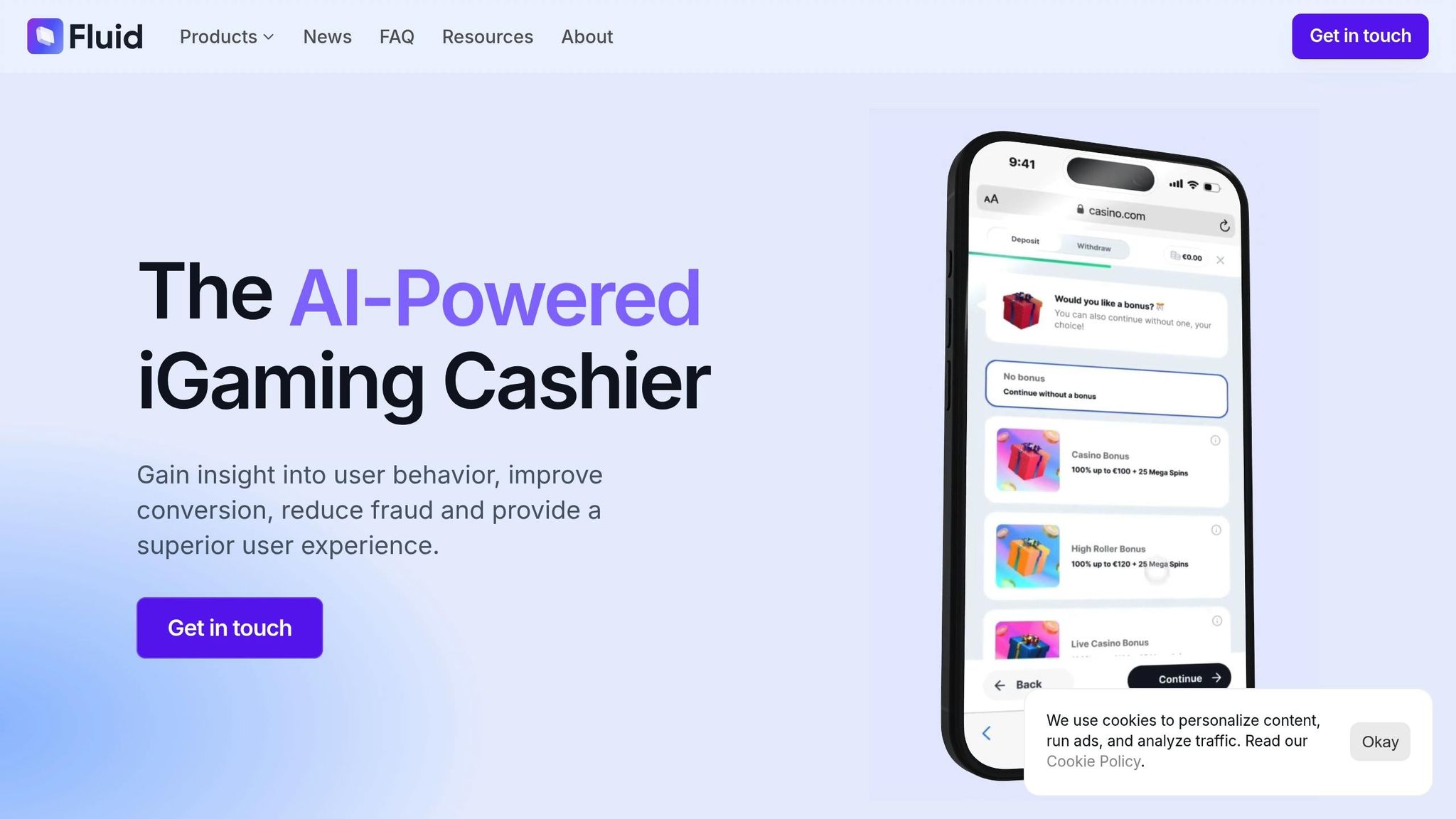
Fluid’s AI-powered digital cashier transforms payment processes into smooth and reliable experiences. By blending advanced technology with a user-first approach, Fluid tackles the unique challenges iGaming operators face, especially when it comes to building player trust through hassle-free transactions.
Key Features Designed for Easy Integration
Seamless brand integration is a standout feature of Fluid. Unlike traditional payment systems, Fluid integrates directly into your platform, maintaining brand consistency. Players stay within your ecosystem, avoiding the confusion and hesitation that often come with being redirected to third-party systems - this means fewer abandoned transactions.
The platform also simplifies complex processes with step-by-step UX guidance. Instead of overwhelming users with too many fields or options at once, Fluid progressively displays information. This thoughtful approach reduces mental strain, making it easier for players to complete transactions without second-guessing what’s required.
With a mobile-first design, Fluid ensures payments are effortless on any device. Since many iGaming players prefer gaming on their phones, Fluid prioritises touch-friendly layouts, well-sized buttons, and interfaces tailored for mobile users, ensuring a smooth experience across the board.
Another key feature is real-time user behaviour analytics. Operators gain instant insights into player payment behaviours, pinpointing where users hesitate or abandon transactions. This data allows operators to make quick adjustments, improving completion rates and enhancing the overall user experience.
These features integrate seamlessly with Fluid’s broader payment capabilities.
Support for Multiple Currencies and Cryptocurrencies
Fluid supports a wide range of currencies with localised formatting, such as €1,234.56. For players in regulated markets, transactions are displayed in euros (€) using familiar formatting, reducing confusion and making the process feel natural and straightforward.
In addition to traditional currencies, Fluid supports multiple cryptocurrencies. With digital currencies gaining traction among iGaming players, Fluid ensures operators can offer these options without adding complexity. Players can easily switch between fiat currencies and cryptocurrencies within the same interface, keeping the experience intuitive and flexible.
Fast and Simple Integration
Fluid’s rapid integration process ensures operators can implement its payment solutions quickly. With detailed APIs and documentation, deployment can be completed in just a few days.
Pre-built templates for common iGaming payment scenarios further speed up the process, while robust sandbox testing ensures a smooth rollout. Operators can customise these templates to meet specific needs without compromising on functionality, ensuring efficient and reliable payment processing.
Thanks to its flexible API architecture, Fluid adapts to existing systems, whether they’re legacy setups or modern platforms. This eliminates the need for major infrastructure overhauls, reducing disruption while enhancing payment capabilities.
To top it off, Fluid includes monitoring and alerting systems to notify operators of any payment issues in real time. This proactive approach ensures operators can address problems swiftly, reinforcing the reliable and seamless experience that keeps players coming back.
Conclusion: Building Trust Through Better Cashier Experiences
As we’ve explored, smooth payment systems and visible security measures are at the heart of earning player trust. This connection between hassle-free transactions and trust isn’t just a theory - it directly affects player retention. If a payment process feels clunky or unreliable, players may not just abandon that transaction - they might leave the platform entirely. On the other hand, a frictionless cashier experience lays the groundwork for trust that goes beyond just one payment.
How Smooth Payments Drive Player Loyalty
Every successful transaction strengthens a player’s confidence in the platform. Trust grows with each positive interaction. When payments go through effortlessly, they reinforce the platform’s reliability. This kind of trust often leads to higher lifetime value, more frequent deposits, and, perhaps most importantly, positive word-of-mouth that naturally attracts new players.
Clear and user-friendly interfaces are crucial. For instance, when players can easily view their transaction history with timestamps in the familiar DD/MM/YYYY format and monetary values displayed as €1,234.56, it gives them a sense of control and confidence in their financial dealings.
Security transparency is equally vital. Players who can see fraud protection in action, understand where their money is going, and receive instant transaction confirmations feel reassured. It’s not just about solving problems before they arise - it’s about creating a sense of safety and reliability.
Fluid: The Key to Trust and Satisfaction
Fluid’s solution brings all these trust-building elements together. Its AI-powered digital cashier ensures seamless integration with your brand, so players never feel like they’ve been redirected to an unfamiliar third-party system. Step-by-step user guidance eases any transaction-related anxiety, while real-time behaviour analytics help operators tackle potential friction points before they affect player satisfaction.
With support for multiple currencies, including cryptocurrencies, and a mobile-first design, Fluid ensures that every player can interact with the cashier in a way that feels intuitive and familiar. Whether someone is depositing euros or experimenting with cryptocurrency, the experience remains consistent and reliable.
Even better, Fluid’s efficient integration means operators can implement these features without significant disruptions to their existing systems. Its intelligent design and quick deployment allow platforms to build trust with their players almost immediately.
A dependable payment system fosters loyalty and drives sustainable growth. Seamless cashier experiences are not just a convenience - they’re a cornerstone of long-term player satisfaction and trust.
FAQs
How does AI-driven personalisation improve payment experiences for players in the iGaming industry?
AI-powered personalisation transforms payment experiences by studying player behaviour and preferences in real time. This insight enables operators to simplify payment processes, offer tailored promotions, and maintain secure, transparent transactions, ensuring a seamless and user-friendly experience for players.
When payment journeys are customised to meet individual needs, players feel appreciated and secure. This builds trust and encourages long-term loyalty. Beyond enhancing satisfaction, it deepens the emotional bond between players and the platform, giving operators a competitive edge in the crowded iGaming market.
What are the key localisation features needed to build trust with players in regulated markets in iGaming payments?
To earn the trust of players in regulated markets, it’s important to integrate features tailored to their preferences. This means adopting the correct currency format (€) and offering clear and straightforward payment processes. Dates should follow the local format (DD/MM/YYYY), and numbers must use the proper decimal point (.) and thousand separator (,). Beyond that, using language that resonates culturally, ensuring accurate geolocation to meet compliance standards, and providing secure payment options are key to delivering a smooth and reliable experience.
How does providing clear transaction histories help build player trust on iGaming platforms?
Clear and transparent transaction histories play a crucial role in building trust between players and iGaming platforms. When players can easily track their deposits, withdrawals, and wagers, it reassures them that the platform operates with integrity. This level of visibility helps eliminate doubts and minimises misunderstandings, which are key to earning player loyalty and maintaining credibility.
Moreover, detailed records allow players to independently verify their financial activity, giving them an added layer of confidence. This not only encourages responsible gaming but also highlights the platform’s dedication to creating a secure and fair gaming environment.